|
|
|
|
|
|
|
|
|
Cranston Fine Arts  Aviation Art and Artists World War Two Squadrons UK and Commonwealth No.151 Sqn to No.222 Sqn Aviation Art and Artists World War Two Squadrons UK and Commonwealth No.151 Sqn to No.222 Sqn  No.156 Sqn No.156 Sqn |
[UP] - No.151 Sqn - No.152 Sqn - No.154 Sqn - No.156 Sqn - No.157 Sqn - No.158 Sqn - No.161 Sqn - No.166 Sqn - No.174 Sqn - No.175 Sqn - No.1770 Sqn FAA - No.181 Sqn - No.182 Sqn - No.185 Sqn - No.193 Sqn - No.197 Sqn - No.198 Sqn - No.199 Sqn - No.201 Sqn - No.207 Sqn - No.210 Sqn - No.213 Sqn - No.217 Sqn - No.218 Sqn - No.222 Sqn |
We light the way
Formed on 12th October 1918, the squadron flew DH9 aircraft, but did not become fully operative, and was disbanded on 9th December 1918. The squadron reformed on 14th February 1942, with Wellington aircraft, which it used until these were replaced with Lancasters in January 1943. The squadron was disbanded on 25th September 1945.
| No.156 Sqn Aviation Art Prints, Paintings and Drawings Aviation Prints |
|
| Text for the above items : |
A Spot of Gardening by Ivan Berryman. Wellington Mk.III X3671 of 156 Sqn piloted by P/O Fox is depicted laying mines in the Estuary of the Loire on the night of 16th April 1942 in the Bay of Biscay. Just three days later, P/O Fox failed to return from a similar 'Gardening' sortie whilst flying Wellington X3485. |
| No.156 Sqn RAF Aircraft details |
DH9 Manufacturer : De Havilland Built : 4091 | DH9 The first deliveries were made in November 1917 to 108 Squadron RFC and it first went into combat over France in March 1918 with 6 Squadron, and by July 1918 nine squadrons operational over the Western Front were using the type. The DH.9's performance in action over the Western Front was a disaster, with heavy losses incurred, both due to its poor performance and to engine failures, despite the prior derating of its engine. Between May and November 1918, two squadrons on the Western Front (Nos. 99 and 104) lost 54 shot down, and another 94 written off in accidents. Nevertheless, on 23 August 1918 a DH9 flown by Lieutenant Arthur Rowe Spurling of 49 Squadron, with his observer, Sergeant Frank Bell, single-handedly attacked thirty Fokker D.VII fighters, downing five of them.[citation needed] Captain John Stevenson Stubbs managed 11 aerial victories in a DH9, including the highly unusual feat of balloon busting with one. The DH.9 was also more successful against the Turkish forces in the Middle East, where they faced less opposition, and it was used extensively for coastal patrols, to try to deter the operations of U-boats. Following the end of the First World War, DH.9s operated by 47 Squadron and 221 Squadron were sent to southern Russia in 1919 in support of the White Russian Army of General Denikin during the Russian Civil War. The last combat use by the RAF was in support of the final campaign against Mohammed Abdullah Hassan (known by the British as the "Mad Mullah") in Somalia during January—February 1920. Surprisingly, production was allowed to continue after the end of the war into 1919, with the DH.9 finally going out of service with the RAF in 1920 |
 Lancaster Manufacturer : Avro Built : 7377 | Lancaster The Avro Lancaster arose from the avro Manchester and the first prototype Lancaster was a converted Manchester with four engines. The Lancaster was first flown in January 1941, and started operations in March 1942. By March 1945 The Royal Air Force had 56 squadrons of Lancasters with the first squadron equipped being No.44 Squadron. During World War Two the Avro Lancaster flew 156,000 sorties and dropped 618,378 tonnes of bombs between 1942 and 1945. Lancaster Bomberss took part in the devastating round-the-clock raids on Hamburg during Air Marshall Harris' "Operation Gomorrah" in July 1943. Just 35 Lancasters completed more than 100 successful operations each, and 3,249 were lost in action. The most successful survivor completed 139 operations, and the Lancaster was scrapped after the war in 1947. A few Lancasters were converted into tankers and the two tanker aircraft were joined by another converted Lancaster and were used in the Berlin Airlift, achieving 757 tanker sorties. A famous Lancaster bombing raid was the 1943 mission, codenamed Operation Chastise, to destroy the dams of the Ruhr Valley. The operation was carried out by 617 Squadron in modified Mk IIIs carrying special drum shaped bouncing bombs designed by Barnes Wallis. Also famous was a series of Lancaster attacks using Tallboy bombs against the German battleship Tirpitz, which first disabled and later sank the ship. The Lancaster bomber was the basis of the new Avro Lincoln bomber, initially known as the Lancaster IV and Lancaster V. (Becoming Lincoln B1 and B2 respectively.) Their Lancastrian airliner was also based on the Lancaster but was not very successful. Other developments were the Avro York and the successful Shackleton which continued in airborne early warning service up to 1992. |
 Wellington Manufacturer : Vickers | Wellington The Vickers Wellington was a Bomber aircraft and also used for maritime reconnaissance. and had a normal crew of six except in the MKV and VI where a crew of three was used. Maximum speed was 235 mph (MK1c) 255 mph (MK III, X) and 299 mph (MK IIII), normal operating range of 1805 miles (except MK III which was 1470miles) The Wellington or Wimpy as it was known, was the major bomber of the Royal Air Force between 1939 and 1943. The Royal Air Force received its first Wellingtons in October 1938 to 99 squadron. and by the outbreak of World war two there were 6 squadrons equipped with the Vickers Wellington. Due to heavy losses on daylight raids, the Wellington became a night bomber and from 1940 was also used as a long range bomber in North Africa. and in 1942 also became a long range bomber for the royal Air Force in India. It was well used by Coastal Command as a U-Boat Hunter. The Wellington remained in service with the Royal Air Force until 1953. Probably due to its versatile use, The aircraft was also used for experimental work including the fitting of a pressure cabin for High altitude tests. The Vickers Wellington could sustain major damage and still fly, probably due to its construction of its geodesic structure and practical application of geodesic lines. Designed by Sir Barnes Wallis |
| No.156 Sqn RAF Pilot and aircrew signature details |
Peter Bond Our estimated value of this signature : £20 | Peter Bond Bomb Aimer 100 & 156 Pathfinder Squadrons |
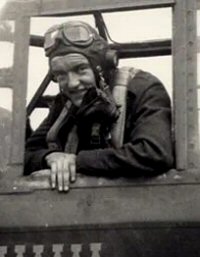  Flt Lt Don Briggs DFM Our estimated value of this signature : £45 Died : 2018 | Flt Lt Don Briggs DFM Don Briggs spent two years at RAF Halton qualifying as an engine fitter before serving on RAF flying units until he volunteered in December 1943 for the new aircrew trade of Flight Engineer. After a period of training he joined No.156 Squadron equipped with the Lancaster. The unit was part of Bomber Command's Pathfinder Force. The flight engineer was the pilot's mate who managed the engines, fuel systems and the ancillary equipment. He teamed up with Flying Officer Bill Neale and they were to complete sixty-two bombing operations together. Their first sortie was on June 11th, 1944 when Bomber Command was attacking targets in support of the Allied landings in Normandy. Railway marshalling yards, supply dumps and construction sites for the V-1 flying bombs and storage sites for the V-2 rocket were their primary targets. By late August, Bomber Command resumed its campaign against the industrial cities in Germany and Briggs attacked Russelheim, Kiel, Stettin and cities in the Ruhr. His crew marked targets with flares to allow the main force to mount accurate attacks. After the war, Briggs flew long-range transport sorties in York aircraft (based on the Lancaster) before spending three years at the Empire Test Pilot's School at Farnborough. In July 1951 he started training as a pilot and, after converting to jets, he joined the newly-formed No.10 Squadron to fly the twin-engine Canberra bomber. In August 1955 he trained on the first of the RAF's V-bombers, the Valiant. He joined the first squadron, No.138, and a year later he transferred to No.49 Squadron, which was being formed for the task of conducting the nuclear weapons trials in the Pacific. Operation Grapple was mounted in 1957 to test Britain's first thermonuclear megaton weapon, the Hydrogen Bomb. The site chosen for the test was Malden Island 400 miles south of Christmas Island in the South Pacific. Briggs was the second pilot in the crew of Squadron Leader Arthur Steele. They flew their Valiant bomber to the newly constructed airfield on March 18, 1957 and began a period of intensive training. On May 15th, No.49 Sqn's commanding officer, Wing Commander Ken Hubbard, dropped the first weapon successfully. For the second drop on May 31st, Steele, Briggs and their crew flew the reserve aircraft and for the third and final test, they were tasked for the sortie. On June 19th, they took off and climbed to 45,000 feet, and carried out a practice run over the target before clearance to drop the bomb was given. Fifty seconds after release, the bomb exploded at the pre-determined height of 8,000 feet. Steele and Briggs had erected the anti-flash screens in the cockpit of their aircraft before making a precisely executed turn away from the explosion and before the shock wave was felt in the aircraft. The drop was completely successful. A few days after their flight, the squadron returned to Wittering. By the end of the year, Briggs had completed a Valiant captain's course and he transferred to No.138 Squadron where he spent the next three years. This was followed by almost three years as a pilot instructor on Valiants and it was during this period he also converted to the Victor bomber. In 1964 he trained as a flying instructor and spent three years instructing trainee pilots at an RAF flying school near Newark. In January 1967 he converted to the third of the RAF's V-bombers, the Vulcan, and was to spend the next five years as an instructor on the iconic delta-wing aircraft before joining No 9 Squadron shortly before it moved to its new base in Cyprus. After 34 years service, he retired at the end of 1973. There were 88 Vulcan 2s produced and Briggs flew 57 of them during his seven years with the force. He spent 15 years at the Oxford Air Training School training pupils to become commercial airline pilots. He retired aged 65 when he joined the RAF Microlight Association at Halton where his RAF career had begun and where he became the chief flying instructor. Finally, at the age of 84 he decided to finish his flying career having flown 71 different types of aircraft and gliders. He died in July 2018. |
Warrant Officer Ken Calton Our estimated value of this signature : £30 | Warrant Officer Ken Calton Joining the RAF in late 1940, he served as a Flight Engineer with 7, 156 and 12 Squadrons before finally joining 635 Sqn, Pathfinder Force on Lancasters who acted as Master Bombers for this final raid of the war in Europe. |
Flight Lieutenant Ken Carlton Our estimated value of this signature : £15 | Flight Lieutenant Ken Carlton Flight Engineer, 156, 7 and 635 Squadrons. |
Flight Lieutenant Bill Cleland DSO DFC Our estimated value of this signature : £15 | Flight Lieutenant Bill Cleland DSO DFC Having qualified as a Pilot he was posted to 12 Sqn in early 1944 before transferring to 156 Pathfinder Squadron. By the end of the war he had completed 77 Ops in Lancasters. |
Flying Officer Les Hadley Our estimated value of this signature : £10 | Flying Officer Les Hadley As a Navigator Les did a full Tour with 40 Squadron on Wellingtons. His second tour was completed on Mosquitos with 139 PFF, from where he later transferred back to heavy Bombers with 156 PFF, completing his war-time service. |
Squadron Leader Terry Kearns Our estimated value of this signature : £60 Died : 1996 | Squadron Leader Terry Kearns New Zealander Derek Terry Kearns joined the RNZAF in December 1940, transferring to England in 1941 to join 75 (NZ) Squadron, flying Wellingtons. In 1942 he took part in the first 1000 bomber raids before joining 156 Squadron Pathfinders. After a period as an instructor, he joined 617 Squadron at Warboys on operations. He flew the Mosquito FBVI on precision low-level target marking throughout 1944. He took part in most of 617s major operations, including raids on the Samur rail tunnel, and the V1 rocket sites. He died in 1996 aged 75. |
  Flight Lieutenant Douglas Newham LVO DFC Our estimated value of this signature : £40 Died : 2022 | Flight Lieutenant Douglas Newham LVO DFC Douglas Newham was a navigator with 156 and 150 Squadrons, completing a tour in the middle east on Wellingtons. On his return to Britain he would spend a year instructing at navigation school before transferring to the Lancasters of 10 Squadron. Unfortunately, Douglas passed away on March 14th, 2022. |
 Flight Sergeant Jack Watson DFM Our estimated value of this signature : £20 | Flight Sergeant Jack Watson DFM Upon completing his training as a Flight Engineer he joined the same Lancaster crew as Flt Lt William Cleland completing over 76 Ops with this crew in 12 Sqn and later 156 Pathfinder Squadron. |
  Group Captain Geoffrey Womersley DSO DFC Our estimated value of this signature : £50 Died : 2010 | Group Captain Geoffrey Womersley DSO DFC Geoffrey Harland Womersley was born on the 19th November 1914 at Bingley, Yorkshire. Geoffrey went to Bradford Grammar School and in 1936 joined the RAF and trained as a pilot at the RAFs flying school in Egypt. Geoffrey Harland Womersley joined No.102 Squadron flying biplane bombers. The squadron was re equipped with the Whitley bomber. Immediately after the outbreak of war he dropped propaganda leaflets over German cities and bombed the German seaplane bases on Heligoland and Sylt. On the night of May 11 1940, however, Womersley flew on the RAFs first raid on a German town, when 37 aircraft bombed road and rail links at Monchengladbach. The squadron supported the British Expeditionary Force and on 22nd May, his aircraft was hit by flak. Womersley and his crew were forced to bail out. On the ground he inadvertently stumbled into a group of German soldiers. Turning round and striding off in the other direction, he eventually came across some British soldiers. From there he managed to get to Paris and on to the last flight to England from Le Bourget airport. Womersley would go on to complete 30 operations, before becoming a bombing instructor. In August 1942 Womersley volunteered for the new Pathfinder squadrons, joining No 156, one of the Forces original four squadrons. In his Wellington he attacked targets in Germany and in Italy, dropping flares to illuminate the targets. In January 1943, whilst still a junior flight lieutenant, he was awarded a DSO. The citation concluded: He has displayed outstanding ability and pressed home his attacks with unusual courage in the face of enemy fighter and anti-aircraft opposition. 156 squadron was re-equipped with the Lancaster and Womersley went on to complete 25 operations during the Battle of the Ruhr. A few months after receiving his DSO he was awarded a DFC. In April 1943 he joined the air staff at Pathfinder headquarters, working directly for its commander, Air Vice-Marshal Donald Bennett. Ten months later he took command of No 139 Squadron. Womersley was promoted group captain to command the Pathfinder airfield at Gransden Lodge near Cambridge, and flew a number of operations with the resident RCAF Lancaster squadron. He left the RAF in November 1945. Donald Bennett in 1946 established British South American Airways, whose civilianised RAF bombers flew routes to the Caribbean and South America. Womersley along with many other Pathfinder Pilots joined the company. British South American Airways went on to use the Avro Tudor, one of which was lost without trace in the Bermuda Triangle. On May 10th 1954, following the British South American Airways merger with BOAC, Geoff Womersley would go onto to fly a Comet into Rome airport, where another crew took over for the flight to London. Disaster struck when soon after take-off the aircraft suffered an explosive decompression and crashed into the sea off Elba - there were no survivors. Geoffrey remained with the airline until 1968, retiring as one of its senior Boeing 707 captains. Geoff Womersley died on October 28th 2010. |
|
Contact Details |
Sign Up To Our Newsletter!
This website is owned by Cranston Fine Arts. Torwood House, Torwoodhill Road, Rhu, Helensburgh, Scotland, G848LE Contact: Tel: (+44) (0) 1436 820269. Email: cranstonorders -at- outlook.com
|


