|
|
|
|
|
|
|
|
|
Cranston Fine Arts  Aviation Art and Artists World War Two Aircraft Aviation Art and Artists World War Two Aircraft  Me262 Me262 |
[UP] - Beaufighter - Flying Fortress - Fw190 - Halifax - He111 - Hurricane - Lancaster - Liberator - P-38 Lightning - Me109 - Me262 - Mosquito - Mustang - Spitfire - Thunderbolt - More Aircraft |
| Navigation | |
| Page 1 of 3 | Page 1 .. Next |
| Me262 Aviation Prints |
|
|
|
|
|
|
|
|
|
|
|
|
|
|
|
|
|
|
|
|
|
| Navigation | |
| Page 1 of 3 | Page 1 .. Next |
| Text for the above items : |
Return of the Hunters by Nicolas Trudgian. Messerschmitt Me262s of JG7 race back to their base at Brandenburg after intercepting a USAAF bomber raid on Munich, and Luftwaffe air bases in the area. Below them a B-26 has crash-landed in the fields still covered with a sprinkling of late winter snow. In the distance the afternoon sun glistens on the Bavarian Alpine mountains. < |
Deadly Pass by David Pentland. Magdeburg, Germany, 10th April 1945. Attacking from behind and above, ObLt.Walter Schuck, Staffelkapitain of 3./JG7, ripped through the massed boxes of 8th Airforce B17s, downing four in a single high speed pass. |
Running the Gauntlet by Robert Taylor. Though some 1400 of Germanys remarkable Me262 jet aircraft were built, fewer than 300 ever saw action during its short 10 month combat career, the 550 mph fighter-bomber arriving in service too late to make any impression on the course of the war. Most famous of all Me262 units was Jagdverband 44, commanded by General Adolf Galland. Instructed by Hitler to set up a small defensive fighter unit to make the most of the new Me262, Gallands JV44 attracted other top-scoring pilots, including top aces Macky Steinhoff and Walter Krupinski, and the unit soon became dubbed Gallands Squadron of Experts. Though doing their best to repel daylight attacks on jet production plants in Southern Germany, JV44 were fighting a losing battle. During a raid on 9 April 1945 the unit lost nine aircraft - a pattern that was to continue. Also, American fighter pilots, unable to catch the 262 in the air, found success taking the jets out as they took off or landed, catching them while at their most vulnerable. With the Allies driving deeper and deeper into Germany, production of aircraft, spares, fuel, and ammunition, steadily dried up. The point came when JV44, Gallands now legendary Squadron of Experts, finally ground to a halt. Running the Gauntlet shows Me262s of JV44 returning to base in southern Germany, having come under attack from P-51 Mustangs of the 353rd Fighter Group. Almost out of fuel and ammunition, the Me262s have little option but to complete their landing sequence, hoping fervently they are not bounced by American fighters loitering in the area. They are out of luck on this occasion, and although Galland has organised a unit flying Focke-Wulf Fw190D-9s to provide air cover in the area of the airfield, they too have been caught by the 353rd Fighter Groups surprise attack. At the relatively slow speed required on final approach, the Me262s handling is sluggish and the pilot is having enough trouble without the attentions of a bunch of P-51 pilots. At this point the JV44 Me262 remains unscathed, and with the arrival of the Fw190s, there is the possibility this particular jet pilot will survive the day. |
Me262B Night Fighter by Ivan Berryman. The Me262B-1 night fighter of Hajo Hermann. Hajo Hermann flew many hours during flight testing of the Me262B night fighter variant. |
Squadron Leader Schuck, Germany, Spring 1945 by David Pentland. Oberleutnant Walter Schuck moved to JG7 in early March 1945, and assumed command of 3 Staffel on the 26th of that month. In all he was to claim 8 victories while flying the Me262. |
JV44 - Kette of Swallows by Graeme Lothian. The formidable Me262s of JV44 fly above the clouds in 1945. |
In Defense of the Reich by Nicolas Trudgian. The legend of Willie Messerschmitts Me262, and the elite fighter Aces who piloted this revolutionary jet aircraft, is as secure as any born during the Second World War. As they hurtled into the air, climbing at speeds hitherto unknown, a small group of seasoned pilots heralded a new generation of combat aircraft that would extend into the 21st century. At the spearhead of this new era in combat flying was the mercurial fighter leader Adolf Galland. Sacked for opposing the naive tactics of Luftwaffe supremo Hermann Goering, Galland found himself, as a General, once again leading a squadron of fighters into battle. Although too late to change the spectre of imminent defeat, this tiny group of highly decorated Aces fought a courageous rearguard action during the final Defense of the Reich. Seen blasting off an airfield in Bavaria are four Me262s, led by General Adolf Galland. Glistening in the damp air these sleek fighters are on full power in their rush to climb to altitude. Within minutes they will attack an incoming mass formation of B-17s and B-24s. Below, the roads and buildings reflect the sunlight between the scattered clouds of a departing storm. |
Messerschmitt 262 by Graeme Lothian. (P) Original pencil drawing showing two Me262 jet fighters. Signed by Graeme Lothian only. |
End Game by Nicolas Trudgian. For bomber crews, any daylight-bombing mission almost certainly meant combat. If it werent the attentions of determined Luftwaffe fighter pilots, it would be an aerial carpet of flak that welcomed the bombers en route to the target - and again on the journey home. On most missions the Eighth Air Force aircrews had to contend with both. Enduring up to ten hours of concentrated flying under cramped conditions, extreme cold, with the constant noise and vibration produced by four powerful engines, made every mission uncomfortable enough without being shot at. But the USAAF aircrews confronted the odds - a one in three chance of completing a 25-mission tour of operations - cheerfully and with gallant resolve. Playing a major role in the great raids on Germany and other targets in occupied Europe from early in 1944, equipped with the Consolidated B-24 Liberator, the USAAF Second Air Division flew no fewer than 95,048 sorties. Based in Norfolk, England, the crews also attacked targets far distant in Norway, Poland and Rumania, unloading almost 100,000 tons of bombs and claiming over 1000 enemy fighters shot down. Published 2001. |
Jet Ace by Brian Bateman. (P) Walter Schuck claims one of two P-51 Mustangs shot down as his first two victories in his new Me262 jet fighter. Flying with JG7, Walter Schuck claimed his first two victories in the jet on 24th March 1945, and eventually went on to claim eight jet victories, and over 200 enemy aircraft in total. |
The End by David Pentland. An abandoned Me262 shown in 1945 at the end of world war two. |
Jet Legend by Gerald Coulson. No text for this item |
Messerschmitt Me262B-1a/U1 by Ivan Berryman. Messerschmitt Me262B-1a/U1 of 10 Staffel, Natchjagdgeschwader 11. |
First of the Jets by Nicolas Trudgian. No text for this item |
Out of the Blue by Ivan Berryman. (PC) When first posted to Kommando Nowotny based at Achmer, Germany, in October 1944, Leutnant Franz Schall was already credited with a stunning 117 victories, but his score continued to rise as he mastered the beautiful Messerschmitt Me262 jet fighter, adding a further 16 Allied aircraft to his tally including P.51 Mustangs, P.47 Thunderbolts and B.24 Liberators. Having survived a near fatal encounter when both engines of his aircraft seized in combat, he was killed in a landing accident in 1945 whilst posted to JG.7. His aircraft is seen here (nearest), an Me.262 A-1a, number 110404, White 1 |
Ready for Combat by Ivan Berryman. Erich Rudorffer commanding I./JG7 flying the Me262. Erich Rudorffer was the master of multiple scoring - achieving more multiple victories than any other pilot. |
Alpine Thunder by Nicolas Trudgian. By late April 1945 most of the Third Reich had been cut to shreds by the advancing Allied forces and those units remaining intact were regrouping in southern Germany and Austria. With American advance units nearing the outskirts of Munich, on 28th April Adolf Galland took the decision to evacuate his precious jets to Salzburg, deep in the mountains. Bad weather prevented their departure until the following morning and they only just managed to escape under the noses of the encircling Americans. Galland had hoped to battle on with JV44 but the unsuitable mountain airfields prevented the famous fighter wing from doing much to delay the inevitable. So the beautiful Alpine meadows became the final resting place for what was potentially the most formidable fighter unit of the war. In just a few days the jets were left abandoned. Their short, exhilarating war, consigned to history. |
Me262 1As of 3rd Gruppe JG7 by Randall Wilson. (GL) After firing their RM4 rockets against B24s of 448 BG, Lt. Fritz Muller (white 7) and wingman Lt. Fredrich W Shenk break hard right to go around again. |
White 8 - Walter Nowotny by Ivan Berryman. Austrian-born Walter Nowotny was one of Germany's highest scoring aces of WWII with 258 victories to his credit, three of them flying the Messerschmitt Me.262. He is depicted here flying White 8 of Kommando Nowotny based at Achmer, Germany in 1944. He was killed in action later that year following a fraught combat with US fighters during the Defence of the Reich. |
Too Little Too Late by Stan Stokes. Heinz Bar joined JG 51 in 1939 as a non-officer pilot. By August of 1940 he had become the highest scoring non-officer pilot in the Luftwaffe. Although shot down once during the Battle of Britain, Bar survived, and was later transferred to the Eastern Front. He received his commission and by the end of 1941 had chalked up 91 victories. By mid-1942, with 113 victories, he was promoted to Hauptman and made Group Commander of I/JG 77. Flying out of Sicily he participated in the siege of Malta, and later was shifted to North Africa where he obtained another 61 victories. With his health suffering, Heinz was reassigned to Germany, where he flew interception missions against the steady onslaught of Eighth Air Force bombers. With his victory total at 202, Bar was put in command of JG 3 and later III/EJG2, a unit equipped with the Me-262 jet fighter. He obtained 16 victories in March and April of 1945 while piloting the 262, making him the top jet ace of WW II. His record for victories in a jet stands until this day, having been equaled in Korea by Capt. Joseph McConnell. Bars final victory count of 220 made him the eighth highest scoring ace of all time. He was killed after the War in a flying accident. The Messerschmitt Me-262 Swallow, a masterpiece of engineering, was the first operational mass-produced jet to see service. Prototype testing of the airframe commenced in 1941 utilizing a piston engine. General Adolf Galland, who was in charge of the German Fighter Forces at that time, pressured both Goring and Hitler to accelerate the Me-262, and stress its use as a fighter to defend Germany from Allied bombers. Hitler, however, envisioned the 262 as the aircraft which might allow him to inflict punishment on Britain. About 1400 Swallows were produced, but fortunately for the Allies, only about 300 saw combat duty. While the original plans for the 262 presumed the use of BMW jet engines, production Swallows were ultimately equipped with Jumo 004B turbojet engines. The wing design of the 262 necessitated the unique triangular hull section of the fuselage, giving the aircraft a shark-like appearance. With an 18 degree swept wing, the 262 was capable of Mach .86. The 262 was totally ineffective in a turning duel with Allied fighters, and was also vulnerable to attack during take off and landings. The landing gear was also suspect, and many 262s were destroyed or damaged due to landing gear failure. Despite its sleek jet-age appearance, the 262 was roughly manufactured, because Germany had lost access to its normal aircraft assembly plants. In spite of these drawbacks the 262 was effective. For example, on April 7, 1945 a force of sixty 262s took on a large force of Allied bombers with escort fighters. Armed with their four nose-mounted cannons, and underwing rockets the Swallows succeeded in downing or damaging 25 Allied B-17s on that single mission. While it is unlikely that the outcome of the War could have been altered by an earlier introduction or greater production totals for this aircraft, it is clear to many historians that the duration of the War might have been drastically lengthened if the Me-262 had not been too little too late. |
The New Steed by David Pentland. Neumunster, Germany, 24th March 1945. Four days after his first flight in an Me262, ObLt. Walter Schuck and his wingman engaged an F5 Lightning escorted by two P51 Mustangs. His wingman downed the F5, and in the subsequent chase Schuck claimed the 2 Mustangs. |
| Me262 Pilot and aircrew signature details |
 Leutnant Alfred Ambs Our estimated value of this signature : £45 Died : 2010 | Leutnant Alfred Ambs Born in Gladbeck on the 23rd January 1923, Alfred Ambs joined the Luftwaffe on the 10th July 1942. Initiqally attached to a training unit, he flew Ju88s, Me110s, Me109 and Fw190 aircraft. He was in the following units : Flg.Rgt. 53, Luftkriegsschule 3, Flugzeugführerschule C14 in Prague. Flugzeugführerschule B33 (Prague-Rusin), and Zerstörergeschwader 101. As the war situation worsened, Ambs was transferred to train on the new Messerschmitt 262 fighter with JG7 in Lechfeld. Flying with this unit, Ambs shot down 6 Allied aircraft to finish the war an Me 262 jet Ace. He flew his last mission on 23rd March 1945, and had flown a total of nearly 75 missions on the Me262. Sadly, Alfred Ambs passed away on 30th March 2010. |
 Heinz Bar Our estimated value of this signature : £50 Died : 1957 | Heinz Bar Lieutenant Colonel Oskar-Heinz Heinrich 'Pritzl' Bär born 25 May 1913 was a German Luftwaffe flying ace who served throughout World War II in Europe. A flying ace or fighter ace is a military aviator credited with shooting down five or more enemy aircraft during aerial combat. He flew over a thousand combat missions, and fought in all major German theatres of the war, including the Western, Eastern and Mediterranean fronts. On 18 occasions he survived being shot down, and he was credited with 220 aerial victories. Heinz Bär, a Saxon with a strong accent, joined the Reichswehr in 1934 and transferred to the Luftwaffe in 1935. Serving first as a mechanic, then as a pilot on transport aircraft, he was informally trained as a fighter pilot. He claimed his first aerial victory in September 1939 on the French border. By the end of the Battle of Britain, his tally of victories had increased to 17. Transferred to the Eastern front to participate in Operation Barbarossa, he quickly accumulated further victories, a feat that earned him the Knight's Cross of the Iron Cross with Oak Leaves and Swords for 90 aerial victories in February 1942. During the remainder of World War II, Heinz Bär was credited with 130 other aerial victories, including 16 while flying one of the first jet fighters, the Me 262, an achievement which would normally have earned him the coveted Knight's Cross of the Iron Cross with Oak Leaves, Swords and Diamonds However, Hermann Göring's personal dislike of Bär, coupled with Bär's insubordinate character and lack of military discipline, deprived him of this award. After World War II, Bär continued his career as an aviator and was killed in a flying accident on 28 April 1957 near Braunschweig. |
 Gerhard Barkhorn Our estimated value of this signature : £150 Died : 1983 | Gerhard Barkhorn Gerhard Barkhorn joined II/JG52 in August 1940. In June 1943 he was promoted Kommandeur II/JG52, and in November that year he became only the fifth fighter pilot to reach 200 victories. He achieved his 300th victory on 5th January 1945. Promoted Komodore of JG6 near the end of the war, he was then summoned by Galland to join JV44. Barkhorn flew 1104 missions, and with 301 victories was the second highest scoring Ace in history. He was awarded the Knights Cross with Oak Leaves and Swords. Born 20th May 1919, died alongside his wife 8th January 1983 in a car accident. |
  Oberstleutnant Hans-Georg Batcher Our estimated value of this signature : £50 Died : 2003 | Oberstleutnant Hans-Georg Batcher Born 13th January 1914, he was flying with KG4 by 1st April 1936 as an observer. He went to pilot training in September 1936, flew with KG27 and by 15th July 1941 was flying with KG100, who he flew with, and commanded until 12th June 1944, including after it was renamed KG4 on 11th January 1943. He then joined KG76 flying the Arado Ar234 bomber, before going on to command KG54 flying the new Me262 jet ffrom 27th February 1945. In his career he was awarded the Iron Cross I and II, the German Cross in Gold and the Knights Cross with Oak Leaves. He died on 23rd April 2003. |
  Major Hans-Ekkehard Bob Our estimated value of this signature : £50 Died : 2013 | Major Hans-Ekkehard Bob After success in the Battle of Britain, Hans-Ekkehard Bob took over leadership of 9./JG54 in 1940. The following year he was awarded the Knights Cross. Transferring to the Eastern Front his victories rose steadily to 50 by September 1942. His Group later transferred back to the West for a short period, where in April 1943, he rammed a B-17 Fortress. Returning to the Eastern Front as Kommander of IV./JG3, he ended the war as Adjutant of Gallands JV44 in the West. In his 700 missions he scored 60 victories. A Clipped Signature is Available |
  Oberst Hermann Buchner Our estimated value of this signature : £65 Died : 2005 | Oberst Hermann Buchner Hermann Buchner was born in Salzburg, Austria, 30th October 1919. Hermann Buchners first combat role was ground attack. After 215 combat missions he was badly injured when his Me109 exploded at 22,000ft. Returning to action in 1943, he flew a further 200 missions before again being wounded. Back in action a third time, he fought in the Crimea and Romania. After 500 ground attack missions he transferred to join Nowotny, the Me262 jet trials unit, and then 9./JG7. He was the first jet pilot in history to score a victory. Hermann Buchner had 58 air victories plus 48 tanks, numerous trucks and anti-aircraft units. He was awarded the Knights Cross in July 1944. Hermann Buchner died in Lorsching, 1st December 2005, aged 86. A Clipped Signature is Available |
  Hauptmann Georg Csurusky Our estimated value of this signature : £55 | Hauptmann Georg Csurusky After completing his pilot training, Georg was posted in January, 1943, to 1.KG51 on the eastern front, flying the JU-88 all-weather medium bomber. In August, 1943, he converted to fly the ME-410 Hornet. On October 3rd 1943 Hauptmann Georg Csurusky was awarded the Deutsches Kreuz in Gold (The German Cross in Gold). In 1944, 1 Gruppe KG51 converted to train on the ME-262 jet fighter-bomber for the Western Front. Georg flew the 262 on the attack on the Ludendorff Bridge. At the war's end he had flown 209 combat missions on both fronts, 68 of which were in the ME-262. |
 Leutnant Jorg Czypionka Our estimated value of this signature : £30 | Leutnant Jorg Czypionka Very few Luftwaffe pilots flew the Me262 jet as a night-fighter. Jorg Czypionka was one of them. In 1944 he flew Fw190 and Me109 night fighters before moving to 10./NJG11 flying high altitude Me109s. In January 1945 he joined a new unit - Kommando Welter - which was formed within 10./NJG11 to counter the RAF Mosquitos flying fast intruder operations. Equipped with single seat Me262 fighters he flew his jet 'Red 6' alongside the top scoring jet ace of all time, Kurt Welter, scoring two confirmed night victories over Mosquitos. |
  Leutnant Gottfried Fahrmann Our estimated value of this signature : £65 Died : 2000 | Leutnant Gottfried Fahrmann Gottfried Fahrmann had been Macky Steinhoff's longstanding wingman and adjutant in their time together with JG77, which Steinhoff had commanded in Italy. Steinhoff had insisted that Fahrmann be brought into Galland's JV44 unit to continue as his wingman and was one of the original members of the squadron of experts. Together they led the first formation of JV44s Me262s on their journey south to Munich on March 31st 1945. After surviving being shot down by a P51 Mustang, Gottfried was taking off alongside Steinhoff when Macky had his terrible accident. One known victory was on the 25th May, 1944. Fahrmann scored his 2nd victory a P-38 over Bologna, Italy. His 3rd, a P-51 at Ploesti on 24 June, 1944. He also scored 2 victories flying the Me262, both of these being B-17 bombers in the Stuttgart area on 8th April, 1945. He died on 20th September, 2000. |
  General Adolf Galland Our estimated value of this signature : £80 Died : 1996 | General Adolf Galland Adolf Galland fought in the great Battles of Poland, France and Britain, leading the famous JG26 Abbeville Boys. He flew in combat against the RAFs best including Douglas Bader, Bob Stanford Tuck and Johnnie Johnson. In 1941, at the age of 29, he was promoted to Inspector of the Fighter Arm. In 1942 Hitler personally selected Galland to organise the fighter escort for the Channel Dash. He became the youngest General in the German High Command but open disagreements with Goering led to his dismissal at the end of 1944. He reverted to combat flying, forming the famous JV44 wing flying the Me262 jet fighter, and was the only General in history to lead a squadron into battle. With 104 victories, all in the West, Adolf Galland received the Knights Cross with Oak Leaves, Swords and Diamonds. Born 19th March 1912, died 9th February 1996. Born in 1911, Adolf Galland learned to fly at a state-sponsored flying club in the early 1930s. In 1933 he was selected to go to Italy for secret pilot training. Galland flew for a brief time as a commercial airline pilot prior to joining the clandestine Luftwaffe as a Second Lieutenant. In April of 1935 he was assigned to JG-2, the Richtofen Fighter Wing, and in 1937 he joined the ranks of the Condor Legion flying the He-51 biplane fighter in support of General Franco during the Spanish Civil War. Despite flying 280 missions, Galland attained no aerial victories, a rather inauspicious start for a pilot would go on to attain more than 100 aerial victories - the highest for any pilot who flew on the Western Front. During Germanys invasion of Poland, Galland was assigned to an attack squadron and he flew over fifty ground sorties. He was promoted to Captain for his efforts, but Galland was anxious to return to a fighter squadron, and he got his wish in October of 1939 when he was transferred to JG-27. It was with JG-27 that Galland first learned to fly the Bf-109. In May of 1940 JG-27 flew in support of the invasion of Belgium, and Galland achieved his first combat victory on May 12. Two months later his score had risen to more than a dozen, and at this time he was once again transferred to JG-26 situated on the Channel Coast. Engaging the RAF on a daily basis during the Battle of Britain, Gallands score rose steadily until it exceeded 40 victories by September. After a short leave Galland rejoined JG-26 in Brittany, where the squadron played a defensive role. Following Germanys invasion of Russia in June of 1941, JG-26 became one of only two German fighter squadrons left on the Channel Coast. This resulted in plenty of flying, and by late in 1941 Gallands victory totals had reached 70. Following a near brush with death when the fuel tank of his 109 exploded, Galland was grounded for a time, and sent to Berlin where he was made the General of the Fighter Arm, reporting directly to Goring and Hitler. Galland spent most of the next few years carrying out inspection tours, and was at odds with his superiors about the need for an adequate fighter defense to negate ever-increasing Allied bombing of Germanys cities. He continued to fly combat missions when the opportunity presented itself, despite Gorings orders to the contrary. In January of 1945 almost 300 fighters were lost in an all-out attack on Allied airfields in France, a mission Galland did not support. He was dismissed as General of the Fighter Arm for his insubordination, but reflecting his flying abilities Hitler ordered Galland to organize JV-44, Germanys first jet-equipped fighter squadron. By March of 1945 Galland had recruited 45 of Germanys best surviving fighter pilots, and this new squadron was given the difficult task of trying to counter the daily onslaught of 15th Air Force bombers coming at Germany from the South. Gallands final mission of the War occurred on April 26 when he attained his 102nd and 103rd confirmed aerial victories prior to crash landing his damaged Me262. Several days later the War was over for both Galland and Germany. General Galland died in 1996. A Clipped Signature is Available |
 Feldwebel Ernest Giefing Our estimated value of this signature : £40 | Feldwebel Ernest Giefing Ernest Giefing was born on February 7th, 1924 in Stockerau, Austria. After graduating from flight school he joined the training unit Jagdschule 107 in July, 1943 and later joined Jagdschule 107 as a flying instructor. Five months later, Giefing was posted to Jagdgeschwader 2 Richthofen (JG2) followed by a posting to JG7 in December 1944. Ernest Giefing held the rank of Flight Sergeant by the end of the war, having flown approximately 75 combat missions including 12 in Me262 jets, and gaining four confirmed aerial victories, two in the Me262 and two flying the Me109. Ernest Giefing was shot down four times, the fourth time on March 24th, 1945 - the day of his last combat mission. |
  Oberleutnant Adolf Glunz Our estimated value of this signature : £65 Died : 2002 | Oberleutnant Adolf Glunz Adolf Glunz served with 4/JG-52 on both the Channel Coast and then in Russia. Returning to the English Channel with II./JG-25 he became one of the most successful fighter pilots on the Western Front. Adolf Glunz saw combat continuously right up to the war end and, remarkably, was never shot down or wounded in over 574 missions, many whilst flying the Fw190. Awarded the Knight's Cross in 1943, he acheived a personal score of 71 victories. He died 1st August 2002. |
  Oberleutnant Heiner Haeffner Our estimated value of this signature : £40 | Oberleutnant Heiner Haeffner After flying with II./KG51 Heiner Haeffner transferred to JG7 flying the Me262 and flew the jet on 58 combat missions over Holland, France, Belgium, Germany and Czechoslovakia. He was one of the pilots who flew the Me262 'Yellow 7' now in the Smithsonian Museum. |
 Leutnant Norbert Hannig Our estimated value of this signature : £25 Died : 2014 | Leutnant Norbert Hannig Norbert Hannig began operations with JG54 on the Eastern Front near Leningrad in early 1943, flying first the Messerschmitt Bf109G, later converting to the Fw190. He became a Staffelkapitan with JG54, notching up an impressive 42 victories. Towards the end of the war, in early 1945, he converted to fly the new jet fighter, the Me262, and flew it in combat with III./JG7 from their airfield base at Brandenberg-Briest. Norbert Hannig died on 21st February 2014. |
  Leutnant Herbert Kaiser Our estimated value of this signature : £55 Died : 2003 | Leutnant Herbert Kaiser Herbert Kaiser joined the Luftwaffe before the war, and by 1938 he was a fighter pilot with II./JG186. He flew in the invasion of Poland and then during the Battle of France, scoring his first victory in May 1940. He took part in the Battle of Britain before transferring to the Balkans. In August 1941 he was posted to the Russian Front, then North Africa followed by Italy and the Dolomites. In March 1944 he joined JG1 in the defence of the Reich. Seriously wounded in a parachute jump in August 1944 he was hospitalised until February 1945. he then joined Adolf Galland's JV44. He flew over 1000 missions and achieved 68 victories. He was awarded the Knight's Cross in 1943. He passed away on 5th December 2003. A Clipped Signature is Available |
  General Walter Krupinski Our estimated value of this signature : £75 Died : 2000 | General Walter Krupinski Walter Krupinski first saw combat against the RAF on the Western Front. Transferring to the east, he became a Squadron Commander in the legendary JG52. In 1943 his victories reached 150 but, in March 1944 with 177 victories to his name, he was transferred to Germany to command JG11. Flying high altitude Me109s, he chalked up another 12 victories before being wounded. In September 1944 he was promoted Kommandeur of III./JG26 and led them on Operation Bodenplatte before joining Galland's famous JV44. He completed the war with 197 victories in over 1100 missions. Walter Krupinski, known as Graf Punski or Count Punski in the Jagdwaffe, was a swashbuckling fly-boy with a phenomenal record of 197 aerial victories. Krupinski not only never lost a wingman, but also had the ability to help beginners develop to their full potential. He joined the Luftwaffe in 1939 as a student in the 11th Flying Training Regiment. He first served with the Jagderganzungsgruppe JG52, a combat replacement unit, flying the Me109, in October 1940. By the end of 191, he had earned the Iron Cross 1st class after his seventh victory and was awarded the German Cross in Gold and the Knights Cross one year later after scoring over 52 aerial victories. Krupinski taught the aerial art of closing with the enemy aircraft until it filled the windscreen before firing. It was during this time that the young Erich Hartmann was assigned as Krupinskis wingman. The young and overly enthusiastic Hartmann was seriously struggling in his first attempts at aerial combat, resulting in severe reprimands by the group commander. However, under Krupinskis expert tutelage, Hartmann mastered the art of aerial combat and went on to become the top scoring fighter ace in the world with 352 victories. While still a first lieutenant, Krupinski was selected as Dquadron Commander of 7.JG52 in the spring of 1943. On 5th of July of the same year, he scored victories 80 to 90 - 11 in one day! He later transferred to the Reich Defence in the west with 1./JG5 in the spring of 1944. His units mission was to help halt the Allied strategic bombardment campaign against Germany. Krupinski continued to rack up aerial victories and was awarded Oak Leaves to the Knights Cross after his 177th victory. He was promoted to Captain and became Group Commander of II./JG 11. Later, Krupinski became Group Commander of II./JG 26 Schlageter Group. In March 1945 he joined General Adolf Gallands famed Jagdverband 44 and flew Messerschmitt Me262 jet fighters until the end of the war. After logging a total of 1,100 combat missions, Krupinski was officialy credited with 197 aerial victories. Krupinski was also wounded seven times in aerial combat and received the Verwundetenabzeichen in Gold - the German equivalent of the American Purple Heart. A civilian after the war, Krupinski later joined the new Luftwaffe in 1952 and was promoted to major in 1955. He received jet fighting training from the Royal Air Force and became the first commander of the Jagdbomber Geschwader, Fighter-Bomber Wing - 33. Krupinski flew various jet fighters in the German Air Force, but held dear the last aircraft he flew until his retirement, his beloved F-104G Starfighter. General Krupinski retired as Commander of the German Air Force Tactical Air Command in 1976. He received the Knight's Cross with Oak Leaves. He died 7th October 2000. A Clipped Signature is Available |
  Oberfeldwebel Rony Lauer Our estimated value of this signature : £55 Died : 2002 | Oberfeldwebel Rony Lauer Rony Lauer joined the Luftwaffe in 1937 but was still in pilot training at the start of the war. In 1942 he was posted to join KG30, flying the JU-88 on operations over England and later in the Mediteranean theater. In June, 1944, he transferred to 1./KG51 for training on the ME-262 and flew in in combat a few months later. Rony flew one of the lead aircraft in the attack on the Bridge at Remagen, and flew the 262 until the end of the war. Rony Lauer was witness to the first recorded Allied destruction of a Me262, belonging to the unit known as Kommando Schenk, on 28th August 1944, claimed as destroyed by 78th FG pilots Major Joseph Myers and Second Lieutenant Manford O. Croy flying P-47 Thunderbolts. On August 28th 1944, General William Kepner's men came up against Oberfeldwebel Hieronymus 'Rony' Lauer, a straightforward, clean-cut young man who exuded quiet confidence and seemed incapable of being afraid. He had been living on the edge longer than any of the Americans who were fighting Hitler's jets. Lauer joined the Luftwaffe in 1937 and was in pilot training at the start of the war, in those early days when the Luftwaffe could afford the time for the same kind of rigorous training program that was typical of the Americans. That luxury would vanish, though, and Lauer would eventually find himself fighting alongside men with relatively little experience. With an initial assignment similar to that of his fellow pilot Hans Busch, Lauer flew the twin-prop Junkers Ju 88 in the Mediterranean theater. In 1944, he was transferred to unit 1/KG51 for training on the Me 262 and flew in combat a few months later. He appeared to have a natural feel for the jet aircraft and to be stoic about its flaws. Lauer was to achieve several firsts as a jet pilot and one was becoming the first Me 62 pilot claimed as an aerial victory by the Allies. It happened when Major Joseph Myers led the Surtax Blue Flight of P-47 Thunderbolts of the 82nd Fighter Squadron, 78th Fighter Group, on a fighter sweep at eleven thousand feet near Termonde, Belgium. At 7:15 p.m., Myers saw what he thought was a B-26 Marauder going south very fast and very low. He dove at forty-five degrees registering 450 miles per hour and got right above the aircraft at five thousand feet, observing that it was painted slate blue with no markings. The plane began doing ninety-degree-wide evasive turns, apparently demonstrating in the process what many pilots would conclude later - that it could not turn inside a P-47. Myers cut him off and closed in to within eight hundred yards. That is when Myers remembered that intelligence officers had shown him recognition plats of a new aircraft called the Me 262. The pilot: Rony Lauer. Lauer's guns weren't even loaded. He was ferrying the Me262 on a transfer from Juvincourt, near Reims, France, to Chievres, Belgium. Myers and 2nd Lt. Manford O. Croy Jr. latched on and chased Lauer. As Myers held his thumb over the firing switch, Lauer slowed down and crashed in a plowed field. Myers started shooting as the Me262 touched the ground and continued pumping bursts into it at close quarters, getting hits in the cockpit and both engines. The Me262 skidded across a field, on fire. Lauer leaped out and ran. By then Croy was opening up with his eight .50-caliber guns, and the after-action report indicated that Croy hit the pilot as he ran from the jet. In fact, Lauer was never touched. Myers and Croy are each credited with one-half of an air-to-air victory, officially the first American kill of a jet. Lauer wasn't finished being shot down - it would happen again - but at the very time Allied armies were making a breakout in France, there was a lull in engagements. Rony Lauer died in 2002. |
  Oberleutnant Erwin Leykauf Our estimated value of this signature : £45 | Oberleutnant Erwin Leykauf Born in January 1918, Erwin Leykauf learned to fly at glider school and Luftkriegschule, before being called up to fly at the beginning of the war. He flew with JG21 at the beginning of the Battle of Britain, which soon became JG54 where he scored his first 7 victories. Transferring to the Balkans and later the Eastern Front he was forced into an emergency landing behind enemy lines during Operation Barbarossa, eventually making his way back to rejoin his unit. On the night of 22nd - 23rd June 1942, he claimed 6 victories in less than one hour. In August 1943, Leykauf began converting with JG54 to the Fw190 fighter. At the end of the war he was with JG7, flying the Me262, although he did not get a chance to fly any missions on the jet fighter. Erwin was awarded the Iron Cross I and II and his victories had climbed to 33. |
  Leutnant Siegfried Muller Our estimated value of this signature : £55 | Leutnant Siegfried Muller Born in 1924, Siegfried Muller first flew with JG1 Molders in the south of France. In 1943 he took part in the air battles over Salerno and Monte Cassino. He joined IV./JG3 Udet in June 1944, where he was promoted to Staffelkapitan of 16 Staffel /IV Sturm Gruppe flying heavily armoured Fw190s. With this Gruppe he took part in the Ardennes Offensive and on 1st January 1945, Operation Bodenplatte. At the end of the war he was attached to JG7 for training on the Me262 jet fighter. Awarded the Iron Cross 1 and 2, he scored 17 victories, including 9 four-engined bombers. |
 Major Walter Nowotny Our estimated value of this signature : £400 Died : 1944 | Major Walter Nowotny Walter Nowotny was one of the most popular Luftwaffe leaders. Joining 9./JG54 in 1941, he achieved his first victories in July, but was forced to ditch in the Baltic, spending three days adrift. In 1942 he took command of 9./JG54, and in June 1943 he downed 41 enemy aircraft in one month, another 49 in August, and 45 in September. By 4th September his tally was past 200, and on 14th October he reached 250, at the time the leading Luftwaffe fighter pilot. In August 1943 he was appointed Kommandeur of I./JG54, in February 1944 he became Kommodore of the Schulgeshwader 101 in France, and early in July commanded the unit testing the Me262 as a fighter. Walter Nowotny was killed on 8th November when he crashed on landing, his victories stood at 258. He had been awarded the Knights Cross, Oak Leaves with Swords, and Diamonds. |
  General Gunther Rall Our estimated value of this signature : £75 Died : 2009 | General Gunther Rall A young pilot with III/JG52 at the outbreak of war. He quickly demonstrated his natural ability and leadership qualities, scoring his first air victory early in the Battle of Britain, and by July 1940 was leading 8/JG52. After transfer to the Eastern Front his air victories mounted at an astonishing rate. A crash hospitalised him but within nine months he was back in the cockpit, and, when commanding III/JG52, gained the Wings 500th victory. Gunther fought throughout the war to become the 3rd highest Ace in history with 275 victories. He was awarded the Knights Cross with Oak Leaves and Swords. Gunther Rall was born on March 10, 1918 in the small Bavarian town of Gaggenau, Baden. Immersing himself in Boy Scout activities during the difficult economic times in Germany following WW 1, Rall finished school in 1936 and joined the German Army. Influenced by a friend, who was a young officer in the Luftwaffe, Rall entered pilots school in 1938. His initial posting was with JG52. He attained his first aerial victory during the Battle of France in May of 1940. During the Battle of Britain JG52 absorbed many casualties, and Rall was promoted to Squadron Commander at the young age of 22. With his fair-hair and smooth complexion the young officer looked even younger than his years. But behind this pleasant exterior was a fierce competitor with the heart of a tiger. Later, Ralls squadron would support the attack on Crete, followed by deployment to the Southern Sector on the Eastern Front. Ralls victory totals began to mount. Following his 37 th victory, GiInther was himself shot down. He was lucky to survive the crash, but with a badly broken back he would spend most of the next year in various hospitals. In Vienna at the University Hospital he would meet his future wife, Hertha. Miraculously, Rall recovered and returned to the Luftwaffe in August of 1942. By November his score exceeded 100 and he was awarded the Oak Leaves to accompany the Knights Cross he was awarded only weeks earlier. As the War progressed against Russia, Rall began to encounter ever more experienced Soviet pilots flying better performing aircraft. Despite this fact, and being shot down several more times himself, Ralls victory tally kept rising. By March of 1944 the ace had attained 273 aerial victories. With the War now going badly for Germany, Rall was transferred to the Western Front. He was able to attain only two more victories against the swarms of Allied bombers and fighter escorts which now pounded Germany every day and night. In May of 1944 Rall was shot down by a P-47. Losing his thumb in the battle he remained out of combat until later in 1944. Ralls final assignments included flying 190Ds as Kornmodore of JG300, and flying the Me-262 jet. Ralls 275 aerial victories (attained on less than 700 combat sorties) make him the third highest scoring ace of all time. If not for the down time suffered as a result of his broken back, Rall might have actually equaled or exceeded Erich Hartmanns alltime record of 352 aerial victories. Rall was not much for socializing during the War. He was a fierce competitor with a businessmans attitude about flying. He was an excellent marksman, and possibly the best deflection shot expert of the War. He continued to fly with the Bundeslufwaffe following the War, serving as its Commander-In Chief in 1970-74. Sadly Gunther Rall died on 4th October 2009. A Clipped Signature is Available |
  Hauptmann Ernst Wilhelm Reinert Our estimated value of this signature : £70 Died : 2007 | Hauptmann Ernst Wilhelm Reinert Ernst Wilhelm Reinert flew with JG77, before transferring to the Eastern Front in 1941. He was posted to Tunisia in January 1943 where he became the most successful Luftwaffe Ace in North Africa during that period. On January 2nd 1945 he was given the leadership of IV./JG27. In March he transferred to III./JG7 flying the Me262. In his 715 missions Reinert scored 174 aerial victories. he was awarded the Knight's Cross with Oak Leaves and Swords. Born 2nd February 1919 in Lindenthal, died 5th September 2007. A Clipped Signature is Available |
  Major Werner Roell Our estimated value of this signature : £75 Died : 2008 | Major Werner Roell Werner Roell flew initially in Norway, and was one of the first pilots to land in Norway during that campaign. He later flew operations in Yugoslavia and Crete as Staffelkapitan of 4./St77, subsequently flying in Russia. Transferring to the Ju87, he flew over 400 combat missions in the Stuka, destroying a Soviet cruiser near the Crimea. In early 1945 he was summoned by Adolf Galland to join his famous Me262 Squadron of Experts in JV44, where he served until the end of the war. Werner Roell flew a total of 477 combat missions, and was awarded the Knights Cross. Passed away 10th May 2008. A Clipped Signature is Available |
  Major Erich Rudorffer Our estimated value of this signature : £70 Died : 2016 | Major Erich Rudorffer Erich Rudorffer was born on November 1st 1917 in the town of Zwickau in Saxony. Erich Rudorffer joined the Luftwaffes I./JG2 Richthofen in November 1939, and was soon flying combat patrols in January 1940 and was assigned to I/JG 2 Richthofen with the rank of Oberfeldwebel. He took part in the Battle of France, scoring the first of his many victories over a French Hawk 75 on May 14th, 1940. He went on to score eight additional victories during the Battle of France and the Battle of Britain. Rudorffer recalled an incident in August 1940 when he escorted a badly damaged Hurricane across the Channel - ditching in the English Channel was greatly feared by pilots on both sides. As fate often does, Rudorffer found the roles reversed two weeks later, when he was escorted by an RAF fighter after receiving battle damage. By May 1st 1941 Rudorffer had achieved 19 victories, which led to the award of the Knights Cross. In June 1941 Rodorffer became an Adjutant of II./JG2. In 1942 Rudorffer participated in Operation Cerberus (known as the Channel Dash) and flew over the Allied landings at Dieppe. Erich Rudorffer along with JG2 was transferred to North Africa in December 1942. It was in North Africa that Rudorffer showed his propensity for multiple-victory sorties. He shot down eight British aircraft in 32 minutes on February 9th 1943 and seven more in 20 minutes six days later. After scoring a total of 26 victories in Tunisia, Rudorffer returned to France in April 1943 and was posted to command II./JG54 in Russia, after Hauptmann Heinrich Jung, its Kommodore, failed to return from a mission on July 30th 1943. On August 24th 1943 he shot down 5 Russian aircraft on the first mission of the day and followed that up with three more victories on the second mission. He scored seven victories in seven minutes on October 11th but his finest achievement occurred on November 6th when in the course of 17 minutes, he shot down thirteen Russian aircraft. Rudorffer became known to Russian pilots as the fighter of Libau. On October 28th 1944 while about to land, Rudorffer spotted a large formation of Il-2 Sturmoviks. He quickly aborted the landing and moved to engage the Russian aircraft. In under ten minutes, nine of the of the II-2 Sturmoviks were shot down causing the rest to disperse. Rudorffer would later that day go on and shoot down a further two Russian aircraft. These victories took his total to 113 and he was awarded the Oak Leaves on April 11th 1944. Rudorffer would on the 26th January 1945 on his 210th victory receive the addition of the Swords. In February 1945 Rudorffer took command of I./JG7 flying the Me262. He was one of the first jet fighter aces of the war, scoring 12 victories in the Me262. He shot down ten 4-engine bombers during the 'Defense of the Reich missions'. He was the master of multiple scoring - achieving more multiple victories than any other pilot. Erich Rudorffer never took leave, was shot down 16 times having to bail out 9 times, and ended the war with 222 victories from over 1000 missions. He was awarded the Knights Cross, with Oak Leaves and Swords. Erich Rudorffer died on 8th April 2016. A Clipped Signature is Available |
  Major Wolfgang Schenck Our estimated value of this signature : £45 Died : 2010 | Major Wolfgang Schenck Born 7th February 1913, Wolfgang Schenck joined the Luftwaffe in 1936. After training he was assigned to JG132 flying Me109s before the squadron was renamed ZG1 and converted to Me110s. He took part in operations against Poland, Norway and France but was hospitalised for three months after being wounded. After recovering, he joined EG210, an experimental squadron, to develop fighter bomber tactics. Renamed as SG210, the squadron later took part in the advance into Russia, where Schenck was awarded his Knights Cross. In March 1942 Schenck took command of 1./ZG1, and was awarded the Oak Leaves to his Knights Cross with this unit. He went on to command SG2, flying Fw190s in the Mediterranean. Later, from December 1944 to January 1945, Schenck commanded KG51, flying the newly developed Me262 jet fighter-bomber. Flying over 400 missions, Schenck scored 18 aerial victories and sunk 28,000 tons of shipping. Wolfgang Schenck passed away on 5th March 2010. A Clipped Signature is Available |
  Oberleutnant Walter Schuck Our estimated value of this signature : £70 Died : 2015 | Oberleutnant Walter Schuck Initially with JG3, Walter Schuck was posted north to 7./JG5 in April 1942. On 15 June 1944 he chalked up his 100th victory during a day when he shot down 6 aircraft. Two days later he had his most successful day, achieving 12 victories in twenty-four hours, a feat never surpassed in JG5. On 1 August, he assumed command of 10./JG5. Walter Schuck transferred to fly the Me262 as Staffelkapitan of 3./JG7, and achieved 8 further victories flying the new jet. His final tally was 206 air victories. He was awarded the Knights Cross with Oak Leaves. Walter Schuck died on 27th March 2015. A Clipped Signature is Available |
 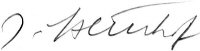 General Johannes Steinhoff Our estimated value of this signature : £80 Died : 1994 | General Johannes Steinhoff By early 1940 Macky Steinhoff was leading 4 / JG-52 during the Battle of Britain. He was then transferred to the eastern front where his success continued. In the final stages of the defence of the Reich he joined JV-44 flying the ME 262 in which he scored 6 victories before being seriously burned in a crash. He flew 939 missions scored 178 victories and was awarded the Knights Cross with Oak leaves and swords. |
  Leutnant Fritz Tegtmeier Our estimated value of this signature : £65 Died : 1999 | Leutnant Fritz Tegtmeier Born in 1917 he joined 2/JG-54 in October 1940, but after being injured in a crash it wasn't until 1941 that he achieved his first victory. A brief time as a fighter Instructor in 1943 he returned to the Russian Front and his score soon started to mount, By May 1944 he had over 100 victories. August 1944 saw his appointment as Staffelkapitan of 3/JG-54. In March 1945 he transferred to JG-7 flying Me262 Jet. By the end of the war he had flown 700 combat missions and had 146 victories. He was awarded the Knights Cross. Fritz Tegtmeier died on 8th April 1999 aged 81. A Clipped Signature is Available |
  Oberfeldwebel Hermann Wieczorek Our estimated value of this signature : £55 | Oberfeldwebel Hermann Wieczorek Hermann Wieczorek joined the Luftwaffe in 1935 and served as a flight mechanic before training as a pilot. Upon qualifying, he served initially as a flying instructor before joining Oberfehlshaber Sud, under General Kesselring, flying photoreconnaissance missions in the ME-110 and JU-88 over Italy and North Africa. In June, 1944, he was transferred to 1./KG51, flying the ME-262 on the Western Front. Hermann flew the 262 in the action against the Bridge at Remagen and afterword until the end of the war. |
| Me262 Squadron details |
EJG2 Country : Germany | EJG2 |
JG7 Country : Germany | JG7 Nowotny was a Luftwaffe fighter-wing of World War II and the first operational jet fighter wing in the world. It was created late in 1944 and served until the end of the war in May 1945, and it operated the Messerschmitt Me 262 jet fighter exclusively. JG 7 was formed under the command of Oberst Johannes Steinhoff, with Kommando Nowotny (the initial Me 262 test wing ) renumbered III./JG 7. Under the command of Major Erich Hohagen III./JG 7 was the only element of JG 7 ready to operate against the Allies. Throughout its existence JG 7 suffered from an irregular supply of new aircraft, fuel and spares. With such a radically new aircraft, training accidents were also common, with 10 Me 262s being lost in six weeks. The technical troubles and material shortages meant initial tentative sorties were only in flight strength, usually no more than 4 or 6 aircraft. Flying from Brandenburg-Briest, Oranienburg and Parchim, the Geschwader flew intermittently against the huge USAAF bomber streams. By the end of February 1945 JG 7 had claimed around 45 four-engine bombers and 15 fighters, but at this stage of war this success rate had no affect whatsoever on the Allied air offensive. During March JG 7 finally began to deliver larger scale attacks against the heavy bomber streams. 3 March saw 29 sorties for 8 kills claimed (one jet was lost). On 18 March III./JG 7 finally managed their biggest attack numerically thus far, some 37 Me 262s engaging a force of 1,200 American bombers and 600 fighters. This action also marked the first use of the new R4M rockets. 12 bombers and 1 fighter were claimed for the loss of 3 Me 262s. The total numbers of aircraft shot down by JG 7 is difficult to quantify due to the loss of Luftwaffe records, but at least 136 aircraft were claimed, and research indicates as many as 420 Allied aircraft may have been claimed shot down. |
JV44 Country : Germany | JV44 A special fighter unit of top German fighter ace pilots in the Luftwaffe during the last months of World War II. The main aircraft used by the unit was the Messerschmitt Me 262 jet fighter. They were known by various nicknames, including "Der Galland-Zirkus" (The Galland Circus). The commander of JV 44 was General Adolf Galland (103 victories) the former General der Jagdflieger who had recently been sacked from his command by Hermann Göring for attacking the operational policies and tactics used by the Luftwaffe High Command. It was hoped by Galland's superiors that a front line command would result in his death in action, thereby removing the problem of Galland's criticism. This unit was composed of highly experienced pilots who were from Galland's former staff or were otherwise co-opted by Galland from units which had been disbanded or were being re-equipped. It had relatively few operational planes available for any single sortie and was repeatedly forced to relocate due to the approach of Allied ground forces. At war's end the unit was disbanded and its brief history came to an end. |
KG51 Country : Germany | KG51 |
NJG11 Country : Germany | NJG11 |
|
Contact Details |
Sign Up To Our Newsletter!
This website is owned by Cranston Fine Arts. Torwood House, Torwoodhill Road, Rhu, Helensburgh, Scotland, G848LE Contact: Tel: (+44) (0) 1436 820269. Email: cranstonorders -at- outlook.com
|


